Get the free app
✅ 100% free 📖 Official sources 🚫 No signup

DMV Written Test Practice

The DMV written test — also called the knowledge test or permit test — is the multiple-choice exam on road rules, traffic signs, and safe driving you must pass before getting a permit or license. Practice the real format right here, free: full tests, a 10-question diagnostic, or an adaptive mock.

~25
Questions in most states
80%
Typical passing score
50
States + DC

What's on the written test

Every state draws its written test from its official driver handbook. Expect questions on right-of-way rules, speed limits and safe following distance, alcohol and drug laws, parking rules, lane markings, and the meaning of road signs. The signs section trips up the most people — drill it separately if you're short on time.

Written test, knowledge test, permit test — same exam

States name the same exam differently: California calls it the knowledge test, many DMVs call it the written test (even though it's on a screen now), and most people call it the permit test because passing it earns your learner's permit. Whatever your state calls it, the practice tests here match its real question count and passing score.

Practice your state's written test

Alabama written testAlaska written testArizona written testArkansas written testCalifornia written testColorado written testConnecticut written testDelaware written testDistrict of Columbia written testFlorida written testGeorgia written testHawaii written testIdaho written testIllinois written testIndiana written testIowa written testKansas written testKentucky written testLouisiana written testMaine written testMaryland written testMassachusetts written testMichigan written testMinnesota written testMississippi written testMissouri written testMontana written testNebraska written testNevada written testNew Hampshire written testNew Jersey written testNew Mexico written testNew York written testNorth Carolina written testNorth Dakota written testOhio written testOklahoma written testOregon written testPennsylvania written testRhode Island written testSouth Carolina written testSouth Dakota written testTennessee written testTexas written testUtah written testVermont written testVirginia written testWashington written testWest Virginia written testWisconsin written testWyoming written test

Sample DMV written test questions
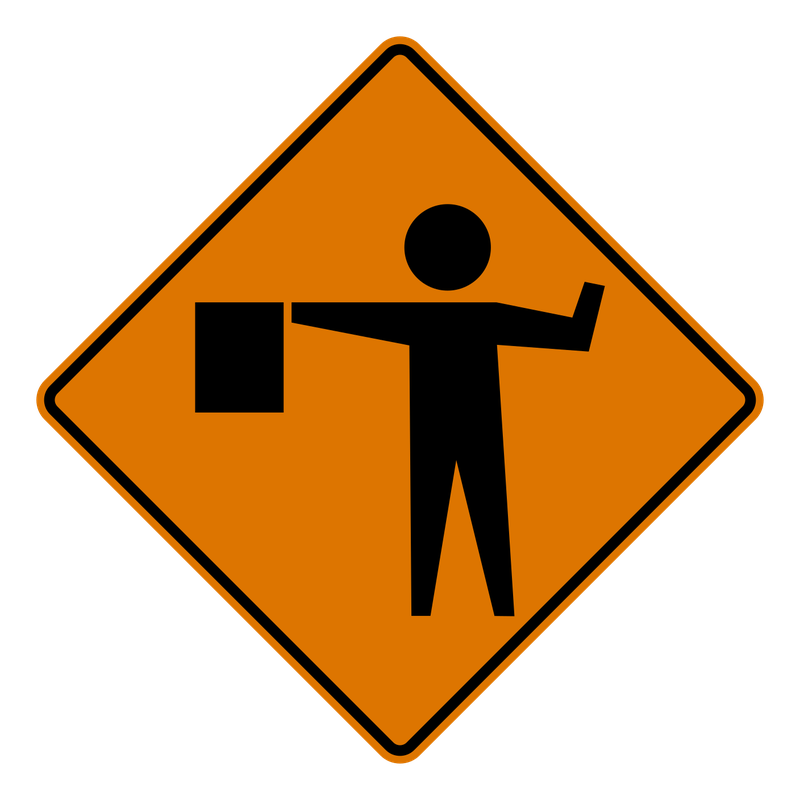
  1. A pennant-shaped yellow sign on the left side of the road means:

    • A. No passing zone
    • B. School zone
    • C. Road work ahead
    • D. One-way street
    Show answer

    A. No passing zone — A yellow pennant sign marks a no-passing zone. Stay in your lane and do not pass until passing is allowed again.

  2. When should you use your vehicle's horn?

    • A. To greet friends
    • B. To express frustration
    • C. To alert others of danger
    • D. When passing another vehicle
    Show answer

    C. To alert others of danger — Use your horn only to warn others of potential danger or to avoid an accident.

  3. What is 'oversteer' and how do you correct it?

    • A. Braking while cornering as applicable in your driving situation
    • B. Steering too early for a turn
    • C. When front wheels lose traction in a turn
    • D. When the rear of the vehicle slides outward in a turn - correct by steering in the direction of the slide and easing off the throttle
    Show answer

    D. When the rear of the vehicle slides outward in a turn - correct by steering in the direction of the slide and easing off the throttle — Oversteer (rear wheel slide) correction: steer toward the slide (counteract rotation), ease off throttle gradually. Avoid sudden braking. Overcorrecting causes a secondary skid in the other direction.

  4. When you see this sign at an intersection, you should expect:

    • A. A T-intersection where the road ends — yield or stop before proceeding
    • B. A four-way stop ahead, not what a T-intersection sign indicates
    • C. Merging traffic from the right
    • D. The road to continue straight
    Show answer

    A. A T-intersection where the road ends — yield or stop before proceeding — A T-Intersection sign warns that the road ends ahead and you must turn left or right. Vehicles on the terminating road must yield to through traffic.

  5. An oncoming car at night has its high beams on and is blinding you. You should:

    • A. Stare at the oncoming headlights
    • B. Close your eyes briefly, which is extremely dangerous while driving
    • C. Turn on your own high beams in response
    • D. Look toward the right edge of your lane until the car passes
    Show answer

    D. Look toward the right edge of your lane until the car passes — To avoid being blinded, glance to the right edge line and use it to guide you until the oncoming vehicle passes.

  6. A cracked or chipped windshield can be dangerous because:

    • A. It reduces structural integrity in a crash and can shatter from vibration
    • B. It is only an aesthetic problem and never affects the vehicle's safety systems
    • C. It reduces visibility minimally
    • D. It can only be a problem in very cold weather
    Show answer

    A. It reduces structural integrity in a crash and can shatter from vibration — Windshields provide significant structural support to the vehicle roof and protect occupants in a rollover. A cracked windshield is weaker and may shatter unexpectedly from road vibration or temperature changes.

  7. If your headlights fail at night, you should:

    • A. Use high beams even if they do not work
    • B. Drive faster to reach a lit area
    • C. Follow another car closely, which risks a rear-end collision if it brakes
    • D. Turn on hazard lights and get off the road as safely as possible
    Show answer

    D. Turn on hazard lights and get off the road as safely as possible — Without headlights, other drivers may not see you and you cannot see hazards. Use available warning lights and leave the road safely.

  8. What is the legal blood alcohol concentration (BAC) limit for drivers 21 and older?

    • A. 0.06%
    • B. 0.10%
    • C. 0.05%
    • D. 0.08%
    Show answer

    D. 0.08% — The legal BAC limit for drivers 21 and older is 0.08% — the federal standard adopted by all U.S. states. Driving with a BAC at or above 0.08% is illegal per se, meaning you can be convicted of DUI without additional evidence of impairment. The limit is lower (0.04%) for commercial drivers and zero tolerance applies to drivers under 21.

  9. What is a 'cabin air filter' and why should it be replaced?

    • A. The engine air filter
    • B. A filter for the exhaust system
    • C. A filter that cleans air entering the passenger compartment through the HVAC system
    • D. A filter only in diesel vehicles
    Show answer

    C. A filter that cleans air entering the passenger compartment through the HVAC system — The cabin air filter cleans air entering the HVAC system for passengers. A clogged filter restricts airflow (weaker heat/AC), allows dust and pollen to enter the cabin, and can reduce defrost effectiveness - typically replaced every 15,000-25,000 miles.

  10. When passing a horse-drawn buggy or other slow-moving vehicle displaying a slow-moving-vehicle emblem, what should you do?

    • A. Slow down early, wait for a clear passing zone with adequate sight distance, and pass only when safe, giving as much room as possible
    • B. Pass immediately regardless of oncoming traffic since they are required to pull over
    • C. Honk repeatedly to signal your approach
    • D. Tailgate closely until they pull over to maintain safe operating conditions
    Show answer

    A. Slow down early, wait for a clear passing zone with adequate sight distance, and pass only when safe, giving as much room as possible — Slow-moving vehicles aren't required to pull over for you; drivers must slow down, wait for a safe passing zone with clear sight distance, and pass with plenty of clearance.

Frequently asked questions

Is the DMV written test the same as the permit test?

Yes — "written test," "knowledge test," and "permit test" all refer to the same multiple-choice exam on road rules and signs. The name varies by state and by who's talking; the format is the same idea everywhere.

How many questions are on the DMV written test?

It varies by state — most states use around 25 questions with a 80% passing score. Pick your state below for its exact question count and passing score; the practice tests here mirror that format.

Can I take the DMV written test online?

It depends on the state. Most states require the knowledge test in person at a licensing office; some offer an online option, usually with age or supervision restrictions. Check your state licensing agency's site for current rules.

What happens if I fail the written test?

You can retake it — waiting periods and retest fees vary by state, so check your state's rules. The readiness dashboard on this page tracks whether you're consistently scoring above your state's passing bar before you go in.

Is this written test practice really free?

Yes. Every practice test on this page and everything in the DMV Prep app is free — no ads, no paywall, no account.


Prefer the app? Get offline mode, an on-device AI coach that explains every mistake, and iCloud sync on iPhone. Download for iPhone Get it on Google Play