Kentucky DMV Practice Test
Free, full Kentucky practice tests right here in your browser — state-configured test length, diagnostic and adaptive modes, spaced-repetition review, and a readiness dashboard. No signup, no paywall — your progress is saved automatically on this device.
Official Kentucky handbook: Kentucky Driver Manual
Before the Kentucky knowledge test
These learner's permit requirements are separate from the written knowledge test score above. Use them to plan your application and supervised-driving timeline.
What to bring to the knowledge test:
- Original birth certificate or certified copy (proof of identity)
- Social Security card
- One proof of Kentucky residency (two for a REAL ID)
- School Compliance Verification Form issued by the applicant's school
- Parent or legal guardian signature on the application (parent/guardian must accompany the applicant to the testing appointment)
Requirements last verified 2026-07-18 · Source: Kentucky Transportation Cabinet — Graduated Driver Licensing Program ↗. See the complete Kentucky permit requirements.
What is different about Kentucky
Rules that are set by Kentucky rather than nationally, and where they depart from what most states do. Compared against DMV Prep's verified rules for all 51 jurisdictions — unverified figures are left out of both sides of every comparison.
- Supervised-driving requirement: 60 hours here. The most common supervised-driving requirement is 50 hours (29 of 49 states we have verified).
Sample Kentucky permit test questions
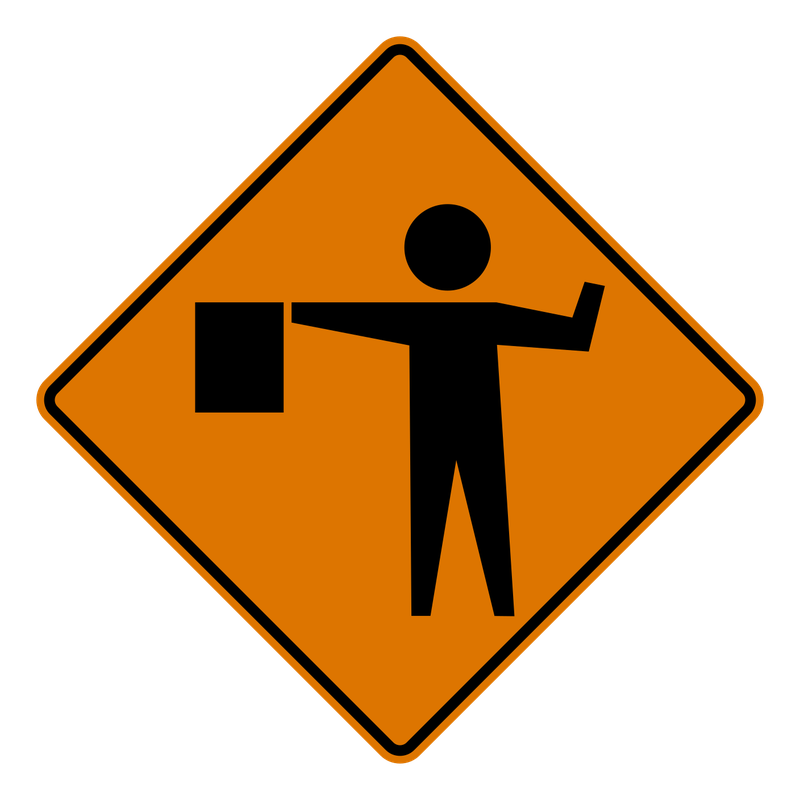
Orange-colored signs indicate:
- A. School zones
- B. Recreational areas
- C. Railroad crossings
- D. Construction zones
Show answer
D. Construction zones — Orange signs warn about construction or maintenance work zones. Slow down, watch for workers and equipment, and be ready for changing lane patterns.
Universal rule · checked against MUTCD 11th Edition, Part 2 — Signs (General) — Traffic Signs — General · verified 2026-08-01
In Kentucky, what should you do when a traffic-control officer directs you differently from a traffic signal?
- A. Follow the officer's direction
- B. Follow the traffic signal only
- C. Stop permanently until another driver moves
- D. Ignore both if the road looks clear
Show answer
A. Follow the officer's direction — Traffic-control officers override signs and signals when they are directing traffic. Follow the officer's lawful direction even if it differs from the signal.
Source: Kentucky Driver Manual — Traffic control and officer directions · verified 2026-06-08
What is the default speed limit on Kentucky interstate highways in rural areas?
- A. 65 mph
- B. 75 mph
- C. 70 mph
- D. 55 mph
Show answer
C. 70 mph — Kentucky's rural interstate speed limit is 70 mph. Limited-access highways (parkways) and other rural state highways generally are posted at 55–65 mph. Residential areas default to 35 mph. School zones are 25 mph when children are present. Kentucky's basic speed rule (KRS §189.390) requires traveling at a speed that is reasonable and prudent given actual road and weather conditions.
Source: Kentucky Driver Manual — Chapter 4 — Speed Limits · verified 2026-06-10
At a T-intersection in Kentucky where one road ends, who must yield?
- A. Both drivers must stop and negotiate
- B. The driver on the through road must yield to the entering driver
- C. Whoever reaches the intersection first has the right of way
- D. The driver on the road that ends must yield to drivers on the through road
Show answer
D. The driver on the road that ends must yield to drivers on the through road — Kentucky follows the standard rule that at a T-intersection, the driver whose road terminates (the stem of the T) must yield to all traffic on the continuous through road. This is true whether or not a yield sign is posted. Always look both ways on the through road before proceeding.
Source: Kentucky Driver Manual — Chapter 4 — Right of Way · verified 2026-06-16
Before changing lanes on a Kentucky highway, a driver should:
- A. Signal and move simultaneously to warn nearby drivers
- B. Check mirrors, signal, check blind spots, then move — all in sequence
- C. Only check the rearview mirror — it shows all nearby traffic
- D. Change lanes during a safe gap without signaling if the move is quick
Show answer
B. Check mirrors, signal, check blind spots, then move — all in sequence — The Kentucky driver manual teaches a four-step lane change: check mirrors for traffic behind and beside you, activate your turn signal, physically check your blind spot over your shoulder, then move to the new lane when clear. Skipping any step increases crash risk.
Source: Kentucky Driver Manual — Chapter 4 — Lane Changes · verified 2026-06-16

Questions last verified 2026-06-08 · Reviewed by the DMV Prep editorial team · Editorial policy
Frequently asked questions
How many questions are in this Kentucky DMV practice test?
This practice test uses 40 questions and a 80% study target — at least 32 correct answers. Confirm the current official exam format with the state licensing agency.
What score should I target for the Kentucky written test?
Use 80% as the practice target on this site. The readiness dashboard tracks consistent performance; the state agency remains the source for current official requirements.
Is this Kentucky practice test really free?
Yes. Every practice test on this page and everything in the DMV Prep app is free — no ads, no paywall, no account.
Where do these Kentucky practice questions come from?
Questions use Kentucky Driver Manual and other handbook or regulatory references, and are not copied from live exams. Citation scope and recency are being revalidated across the bank.
Can I study for the Kentucky permit test in Spanish?
Yes — try the Kentucky practice test in Spanish. The DMV Prep app includes all 3,671+ questions in Spanish.