West Virginia DMV Practice Test
Free, full West Virginia practice tests right here in your browser — state-configured test length, diagnostic and adaptive modes, spaced-repetition review, and a readiness dashboard. No signup, no paywall — your progress is saved automatically on this device.
Official West Virginia handbook: West Virginia Driver's Licensing Handbook
Before the West Virginia knowledge test
These learner's permit requirements are separate from the written knowledge test score above. Use them to plan your application and supervised-driving timeline.
What to bring to the knowledge test:
- Pass the knowledge test
- Parent or legal guardian signature if under 18
- Proof of identity
- Proof of Social Security number
- Two proofs of West Virginia residency
Requirements last verified 2026-07-13 · Source: West Virginia DMV — Driver's Licenses and ID Cards ↗. See the complete West Virginia permit requirements.
What is different about West Virginia
Rules that are set by West Virginia rather than nationally, and where they depart from what most states do. Compared against DMV Prep's verified rules for all 51 jurisdictions — unverified figures are left out of both sides of every comparison.
- Passing score: 76% here. The most common passing score is 80% (15 of 26 states we have verified).
Sample West Virginia permit test questions
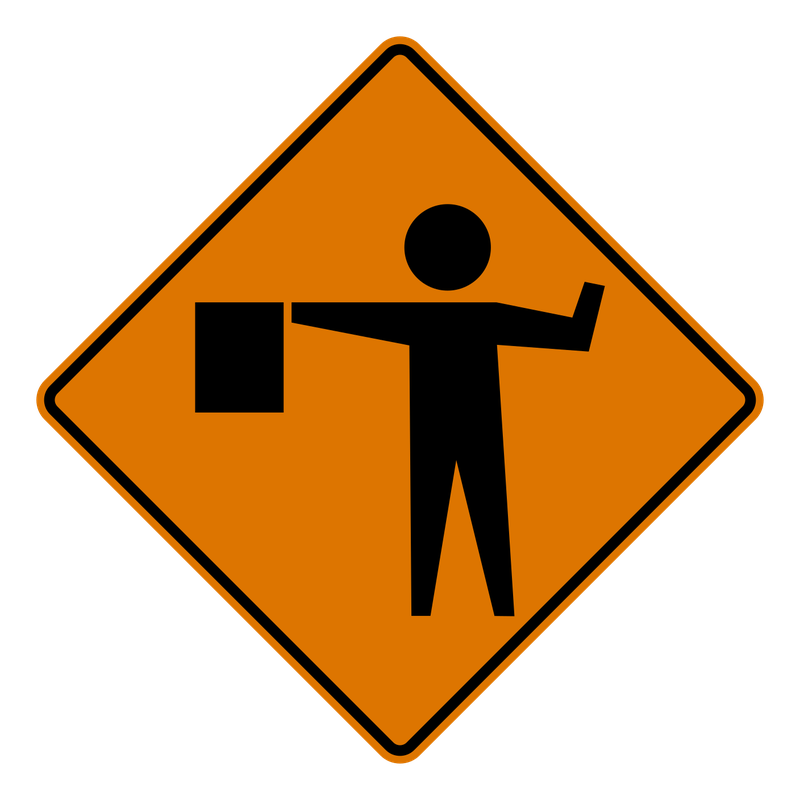
Orange-colored signs indicate:
- A. School zones
- B. Recreational areas
- C. Railroad crossings
- D. Construction zones
Show answer
D. Construction zones — Orange signs warn about construction or maintenance work zones. Slow down, watch for workers and equipment, and be ready for changing lane patterns.
Universal rule · checked against MUTCD 11th Edition, Part 2 — Signs (General) — Traffic Signs — General · verified 2026-08-01
In West Virginia, the posted speed limit in a school zone when children are present is typically:
- A. 15 mph
- B. 20 mph
- C. 25 mph
- D. Same as the adjacent roadway unless otherwise posted
Show answer
A. 15 mph — West Virginia school zones are typically posted at 15 mph when children are present or when the flashing beacon is active. All drivers must stop for school buses with flashing red lights from both directions on undivided roads; on divided highways with a physical barrier, only same-direction traffic must stop. West Virginia imposes doubled fines for school-zone speeding and significant penalties for passing a stopped school bus.
Source: West Virginia Driver's Licensing Handbook — Chapter 4 — School Zones and School Buses · verified 2026-06-10
What is the maximum speed limit on West Virginia's limited-access highways?
- A. 70 mph
- B. 65 mph
- C. 75 mph
- D. 60 mph
Show answer
A. 70 mph — West Virginia's limited-access highways — including portions of I-64, I-77, I-79, and the West Virginia Turnpike — are posted at a maximum of 70 mph. West Virginia's mountainous terrain means many highway segments have lower posted limits. US routes through the mountains often post 55 mph. Residential streets default to 25 mph; school zones require 15 mph when children are present. West Virginia winters with ice and fog frequently require speed reductions.
Source: West Virginia Driver's Licensing Handbook — Chapter 4 — Speed Limits · verified 2026-06-10
On West Virginia highways with steep grades and curves, lane changes are especially dangerous because:
- A. Trucks always use the right lane on grades
- B. Speed limits are lower and changes are unnecessary
- C. Sight distance is limited and vehicles accelerate or decelerate unexpectedly on grades
- D. West Virginia law prohibits lane changes on any grade
Show answer
C. Sight distance is limited and vehicles accelerate or decelerate unexpectedly on grades — Mountain grades and curves reduce sight distance dramatically. Vehicles may be hidden just beyond a crest or around a curve, making lane changes on West Virginia grades particularly hazardous.
Source: West Virginia Driver's Manual — Lane Changing and Passing · verified 2026-06-18
In West Virginia, the following distance behind a school bus should be:
- A. At least 200 feet at all times by law
- B. One car length
- C. The same as behind any other vehicle
- D. At least the standard three-second gap, plus extra for frequent stops
Show answer
D. At least the standard three-second gap, plus extra for frequent stops — West Virginia school buses make frequent stops with short notice. Maintaining extra following distance beyond the standard three seconds gives you reaction time for sudden stops.
Source: West Virginia Driver's Manual — Following Distance · verified 2026-06-18

Questions last verified 2026-06-10 · Reviewed by the DMV Prep editorial team · Editorial policy
Frequently asked questions
How many questions are in this West Virginia DMV practice test?
This practice test uses 25 questions and a 76% study target — at least 19 correct answers. Confirm the current official exam format with the state licensing agency.
What score should I target for the West Virginia written test?
Use 76% as the practice target on this site. The readiness dashboard tracks consistent performance; the state agency remains the source for current official requirements.
Is this West Virginia practice test really free?
Yes. Every practice test on this page and everything in the DMV Prep app is free — no ads, no paywall, no account.
Where do these West Virginia practice questions come from?
Questions use West Virginia Driver's Licensing Handbook and other handbook or regulatory references, and are not copied from live exams. Citation scope and recency are being revalidated across the bank.
Can I study for the West Virginia permit test in Spanish?
Yes — try the West Virginia practice test in Spanish. The DMV Prep app includes all 3,671+ questions in Spanish.