New Hampshire DMV Practice Test
Free, full New Hampshire practice tests right here in your browser — state-configured test length, diagnostic and adaptive modes, spaced-repetition review, and a readiness dashboard. No signup, no paywall — your progress is saved automatically on this device.
Official New Hampshire handbook: New Hampshire Driver's Manual
Before the New Hampshire knowledge test
These learner's permit requirements are separate from the written knowledge test score above. Use them to plan your application and supervised-driving timeline.
What to bring to the knowledge test:
- Proof of identity (original documents only; photocopies not accepted)
- Proof of Social Security number
- Proof of New Hampshire residency
- Parent or guardian consent, if under 18
Requirements last verified 2026-07-18 · Source: New Hampshire DMV — Driver Licensing Requirements for Minors ↗. See the complete New Hampshire permit requirements.
What is different about New Hampshire
Rules that are set by New Hampshire rather than nationally, and where they depart from what most states do. Compared against DMV Prep's verified rules for all 51 jurisdictions — unverified figures are left out of both sides of every comparison.
- Minimum permit age: 15.5 here. The most common minimum permit age is 15 (25 of 50 states we have verified).
- Supervised-driving requirement: 40 hours here. The most common supervised-driving requirement is 50 hours (29 of 49 states we have verified).
Sample New Hampshire permit test questions
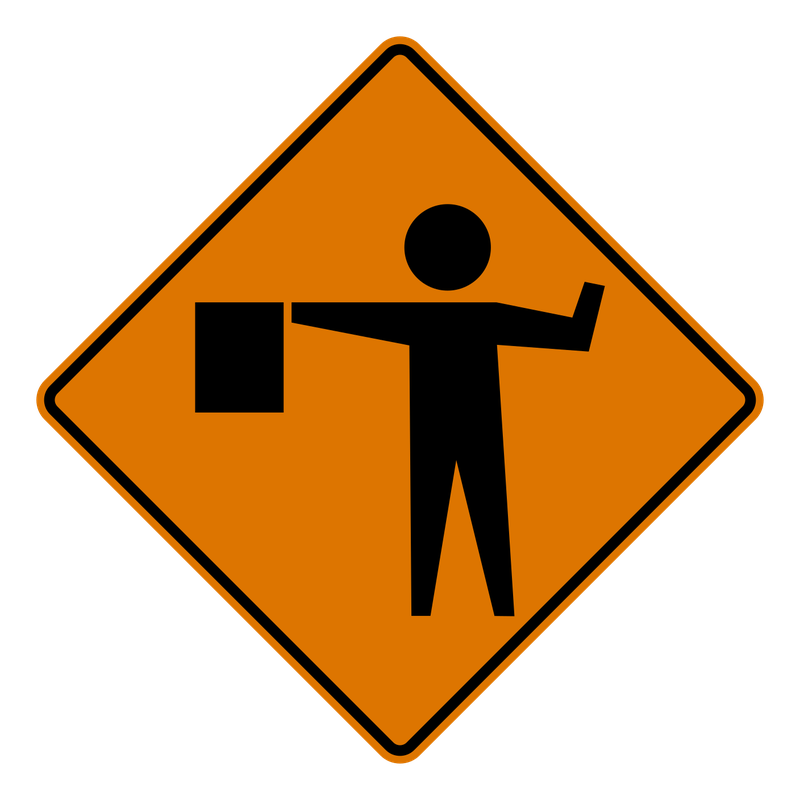
Orange-colored signs indicate:
- A. School zones
- B. Recreational areas
- C. Railroad crossings
- D. Construction zones
Show answer
D. Construction zones — Orange signs warn about construction or maintenance work zones. Slow down, watch for workers and equipment, and be ready for changing lane patterns.
Universal rule · checked against MUTCD 11th Edition, Part 2 — Signs (General) — Traffic Signs — General · verified 2026-08-01
What is the maximum speed limit on New Hampshire's rural interstate highways?
- A. 70 mph
- B. 75 mph
- C. 65 mph
- D. 55 mph
Show answer
C. 65 mph — New Hampshire's rural interstates — including I-93 (north of Concord) — are posted at 65 mph. Urban segments, especially the southern portion of I-93 approaching Manchester and the Massachusetts border, may be 55 mph. New Hampshire's hilly terrain, curves, and winter weather mean speed limits are designed conservatively. Residential streets default to 30 mph unless otherwise posted; school zones require reduced speed when children are present.
Source: New Hampshire Driver's Manual — Chapter 4 — Speed Limits · verified 2026-06-10
In New Hampshire, the typical posted speed limit in a school zone when children are present is:
- A. 15 mph
- B. No statewide minimum — each municipality sets its own school-zone speed
- C. 20 mph
- D. 25 mph, or as posted
Show answer
D. 25 mph, or as posted — New Hampshire school zones are typically posted at 25 mph or less when children are present or when a flashing beacon is active. Local authorities may set lower limits. All drivers must stop for school buses with flashing red lights from both directions on undivided roads; on a divided highway, only same-direction traffic must stop. New Hampshire has no mandatory seat-belt law for adults, but school-zone and school-bus laws are strictly enforced.
Source: New Hampshire Driver's Manual — Chapter 4 — School Zones and School Buses · verified 2026-06-10
In New Hampshire, the minimum signal distance before a turn or lane change in a city is:
- A. 200 feet
- B. 50 feet
- C. 100 feet
- D. 300 feet
Show answer
C. 100 feet — New Hampshire requires signaling at least 100 feet before any turn or lane change within a city or town to give nearby drivers adequate warning of your intended movement.
Source: New Hampshire Driver's Manual — Lane Changing and Passing · verified 2026-06-18
In New Hampshire, after yielding to a passing emergency vehicle, you should wait until:
- A. All traffic behind you has stopped
- B. The emergency vehicle is at least 500 feet away
- C. The emergency vehicle turns off its lights
- D. Five seconds after the vehicle passes
Show answer
B. The emergency vehicle is at least 500 feet away — New Hampshire requires staying stopped until the emergency vehicle is at least 500 feet away before re-entering the roadway, keeping the emergency route fully clear.
Source: New Hampshire Driver's Manual — Emergency Vehicles · verified 2026-06-18

Questions last verified 2026-06-10 · Reviewed by the DMV Prep editorial team · Editorial policy
Frequently asked questions
How many questions are in this New Hampshire DMV practice test?
This practice test uses 40 questions and a 80% study target — at least 32 correct answers. Confirm the current official exam format with the state licensing agency.
What score should I target for the New Hampshire written test?
Use 80% as the practice target on this site. The readiness dashboard tracks consistent performance; the state agency remains the source for current official requirements.
Is this New Hampshire practice test really free?
Yes. Every practice test on this page and everything in the DMV Prep app is free — no ads, no paywall, no account.
Where do these New Hampshire practice questions come from?
Questions use New Hampshire Driver's Manual and other handbook or regulatory references, and are not copied from live exams. Citation scope and recency are being revalidated across the bank.
Can I study for the New Hampshire permit test in Spanish?
Yes — try the New Hampshire practice test in Spanish. The DMV Prep app includes all 3,671+ questions in Spanish.