Texas Motorcycle Permit Practice Test
Free, full Texas motorcycle permit test practice right here in your browser — 25 questions with a configured 80% practice threshold, diagnostic and adaptive modes, spaced-repetition review, and a readiness dashboard. No signup, no paywall — your progress is saved automatically on this device.
Texas motorcycle requirements
| Helmet required | 20 and younger Who the state requires to wear a helmet. Local rules and eye-protection requirements can differ. |
|---|
Compiled from state statutes by IIHS motorcycle helmet use laws table ↗, not published by the state agency. Helmet and equipment rules change — confirm current requirements with DPS.
Primary study source: Motorcycle Safety Foundation — Motorcycle Operator Manual ↗. Always confirm state-specific licensing rules with DPS.
Sample Texas motorcycle permit test questions
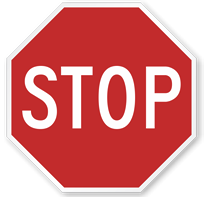
If you see this sign, you should:
- A. Merge right immediately
- B. Slow down and yield if traffic is present
- C. Come to a complete stop before proceeding
- D. Flash your headlights
Show answer
C. Come to a complete stop before proceeding — A stop sign (red octagon) requires a complete stop at the stop line before proceeding. You must yield to all traffic and pedestrians in or approaching the intersection.
Universal rule · checked against Federal Highway Administration / NHTSA — Traffic Signs — Regulatory · verified 2026-06-07
In Texas, which motorcyclists may legally ride without a helmet?
- A. Anyone 18 or older, regardless of training or insurance coverage
- B. Only riders with a passenger
- C. All riders — helmets are never required
- D. Riders 21 or older with a safety course or qualifying insurance
Show answer
D. Riders 21 or older with a safety course or qualifying insurance — Texas requires helmets for riders under 21. Riders 21 or older may ride without one only if they have completed an approved motorcycle safety course or carry a qualifying health insurance policy.
Source: Texas Motorcycle Operator Manual — Helmet exemption — riders 21+ · verified 2026-06-25
In Texas, when must a motorcycle's headlight be on?
- A. After dark and in poor weather
- B. Never, because the headlight is optional equipment
- C. Only when riding on highways outside city limits
- D. Motorcycles made after 1975 must use the headlight day and night
Show answer
D. Motorcycles made after 1975 must use the headlight day and night — Texas requires motorcycles manufactured after 1975 to use their headlight at all times, day and night, to stay visible to other traffic.
Source: Texas Motorcycle Operator Manual — Daytime running lights · verified 2026-06-25
In Texas, a rider may share a single lane with:
- A. One other motorcycle, with the two riding abreast in the lane
- B. Any vehicle at all, once the traffic around it has stopped
- C. One car, while passing it at low speed
- D. No one — Texas bans lane sharing of every kind
Show answer
A. One other motorcycle, with the two riding abreast in the lane — Texas Transportation Code §545.0605, added in 2023, entitles a motorcycle to the full use of a lane and lets two motorcycles ride abreast in one lane. It prohibits riding more than two abreast, operating between lanes of traffic moving in the same direction, and passing a motor vehicle while in that vehicle's lane.
Source: Texas Transportation Code §545.0605 — Tex. Transp. Code §545.0605 — Operation of motorcycles on roadway laned for traffic · verified 2026-08-09
When riding a motorcycle, your lane position should:
- A. Vary based on road conditions and traffic
- B. Match the position of the car ahead
- C. Always be on the left
- D. Always be on the right
Show answer
A. Vary based on road conditions and traffic — Adjust your lane position based on traffic, road conditions, and visibility to maximize safety.
Universal rule · checked against Motorcycle Safety Foundation Motorcycle Operator Manual — Ride Within Your Abilities - Basic Vehicle Control · verified 2026-05-17

Questions last verified 2026-05-17 · Reviewed by the DMV Prep editorial team · Editorial policy
Frequently asked questions
How many questions are in this Texas motorcycle permit test practice test?
This practice test uses 25 questions and a 80% study target — at least 20 correct answers. Confirm the current official exam format with the state licensing agency.
Can I take the Texas motorcycle permit test online?
Check with the DPS — most states require the knowledge test in person at a licensing office, while some offer an online option, usually with age or supervision restrictions. Either way, the practice tests on this page work anywhere, so you can walk in ready.
Is the Texas motorcycle permit test taken at the DMV?
In Texas, driver licensing is handled by the Department of Public Safety (DPS), so you'll often see the exam called the DPS motorcycle permit test. Confirm the current official format with DPS; this page uses DMV Prep's recorded practice configuration.
What score should I target for the Texas motorcycle permit test?
Use 80% as the practice target on this site. The readiness dashboard tracks consistent performance; the state agency remains the source for current official requirements.
Is this Texas motorcycle permit test practice really free?
Yes. Every practice test on this page and everything in the DMV Prep app is free — no ads, no paywall, no account.
Where do these motorcycle permit test questions come from?
Questions use Motorcycle Safety Foundation — Motorcycle Operator Manual and applicable licensing references. Citation scope and recency are being revalidated across the bank.
Can I study for the Texas motorcycle permit test in Spanish?
Yes — the DMV Prep app includes all 3,671+ questions in Spanish, and the whole app works in Spanish.