Virginia Motorcycle Permit Practice Test
Free, full Virginia motorcycle permit test practice right here in your browser — 25 questions with a configured 80% practice threshold, diagnostic and adaptive modes, spaced-repetition review, and a readiness dashboard. No signup, no paywall — your progress is saved automatically on this device.
Virginia motorcycle requirements
| Helmet required | All riders Who the state requires to wear a helmet. Local rules and eye-protection requirements can differ. |
|---|
Compiled from state statutes by IIHS motorcycle helmet use laws table ↗, not published by the state agency. Helmet and equipment rules change — confirm current requirements with your state licensing agency.
Primary study source: Virginia Motorcycle Operator Manual ↗. Always confirm state-specific licensing rules with your state licensing agency.
Sample Virginia motorcycle permit test questions
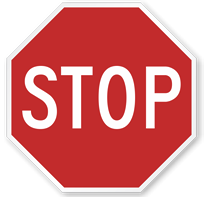
If you see this sign, you should:
- A. Merge right immediately
- B. Slow down and yield if traffic is present
- C. Come to a complete stop before proceeding
- D. Flash your headlights
Show answer
C. Come to a complete stop before proceeding — A stop sign (red octagon) requires a complete stop at the stop line before proceeding. You must yield to all traffic and pedestrians in or approaching the intersection.
Universal rule · checked against Federal Highway Administration / NHTSA — Traffic Signs — Regulatory · verified 2026-06-07
In Virginia, who is required to wear a DOT-approved helmet when operating a motorcycle?
- A. No one — helmets are optional
- B. Riders under age 18
- C. Only riders under 21
- D. All riders, regardless of age
Show answer
D. All riders, regardless of age — Virginia has a universal helmet law: every motorcycle operator must wear a DOT-compliant helmet at all times, regardless of age or experience.
Source: Virginia Motorcycle Operator Manual — Helmet requirements · verified 2026-06-25
In Virginia, a motorcyclist who is not protected by a windshield must have what?
- A. Sunglasses of any type, worn only during daylight hours
- B. A helmet alone, with no goggles or face shield
- C. Tinted lenses, required only when riding after dark
- D. Approved eye protection such as goggles, a face shield, or safety glasses
Show answer
D. Approved eye protection such as goggles, a face shield, or safety glasses — Like nearly every state, Virginia requires motorcyclists to protect their eyes. Riders without a windshield must wear approved eye protection — goggles, a face shield, or safety glasses.
Source: Virginia Motorcycle Operator Manual — Eye protection · verified 2026-06-25
On a long highway ride, fatigue can be avoided by:
- A. Drinking energy drinks continuously to stay alert
- B. Riding faster so the trip ends sooner
- C. Taking breaks every 1-2 hours and stopping if drowsy
- D. Listening to loud music to stay awake
Show answer
C. Taking breaks every 1-2 hours and stopping if drowsy — Stop and rest every 1-2 hours. Stay hydrated, eat light meals, and never ride if you feel drowsy.
Universal rule · checked against Motorcycle Safety Foundation Motorcycle Operator Manual — Ride Within Your Abilities - Increasing Conspicuity and Space Cushion · verified 2026-05-17
Before every ride, you should check your motorcycle's:
- A. Fuel level and mirror position only
- B. Tires, brakes, lights, oil, chain, and controls
- C. GPS navigation and phone mount
- D. Only the items that failed last time
Show answer
B. Tires, brakes, lights, oil, chain, and controls — T-CLOCS is the MSF pre-ride inspection acronym: Tires & wheels, Controls (clutch, throttle, brakes, levers), Lights & electrics, Oil & fluids, Chassis (frame, suspension, chain), and Stands. Running through T-CLOCS before every ride catches problems before they become roadside emergencies.
Universal rule · checked against Motorcycle Safety Foundation Motorcycle Operator Manual — Preparing to Ride - Know Your Motorcycle and Check Your Motorcycle · verified 2026-05-17

Questions last verified 2026-05-17 · Reviewed by the DMV Prep editorial team · Editorial policy
Frequently asked questions
How many questions are in this Virginia motorcycle permit test practice test?
This practice test uses 25 questions and a 80% study target — at least 20 correct answers. Confirm the current official exam format with the state licensing agency.
Can I take the Virginia motorcycle permit test online?
Check with the Virginia licensing agency — most states require the knowledge test in person at a licensing office, while some offer an online option, usually with age or supervision restrictions. Either way, the practice tests on this page work anywhere, so you can walk in ready.
What score should I target for the Virginia motorcycle permit test?
Use 80% as the practice target on this site. The readiness dashboard tracks consistent performance; the state agency remains the source for current official requirements.
Is this Virginia motorcycle permit test practice really free?
Yes. Every practice test on this page and everything in the DMV Prep app is free — no ads, no paywall, no account.
Where do these motorcycle permit test questions come from?
Questions use Virginia Motorcycle Operator Manual and applicable licensing references. Citation scope and recency are being revalidated across the bank.
Can I study for the Virginia motorcycle permit test in Spanish?
Yes — the DMV Prep app includes all 3,671+ questions in Spanish, and the whole app works in Spanish.